


For 25 years, the shuttered Kroger at the corner of Fuqua Street and Blueridge Road in Missouri City stood as a quiet monument to what used to be and for Charity Carter, it was a reminder of what could be, an H-E-B.
Now, the silence of that defunct retail center has been replaced by the sound of celebration as the Robert & Bertha Edison Cultural Arts Center comes to life. The $35 million revitalization project has transformed an abandoned shopping plaza into a 79,525-square-foot beacon of hope for the Fort Bend community.
The milestone was bolstered by a historic investment from Texas retail giant H-E-B, whose support has helped solidify the center’s mission to provide arts education and economic opportunity in a historically underserved area.
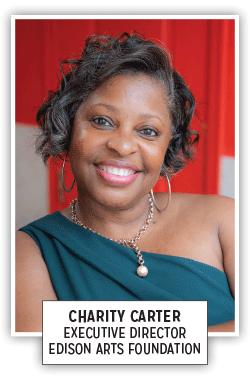
“This project has been a journey—one of faith, perseverance, and a deep commitment to the people who call this community home,” said Carter, the founder and executive director of the Edison Arts Foundation. “We’ve had to navigate so many hurdles, but the vision keeps us going.”
A Legacy in the Making
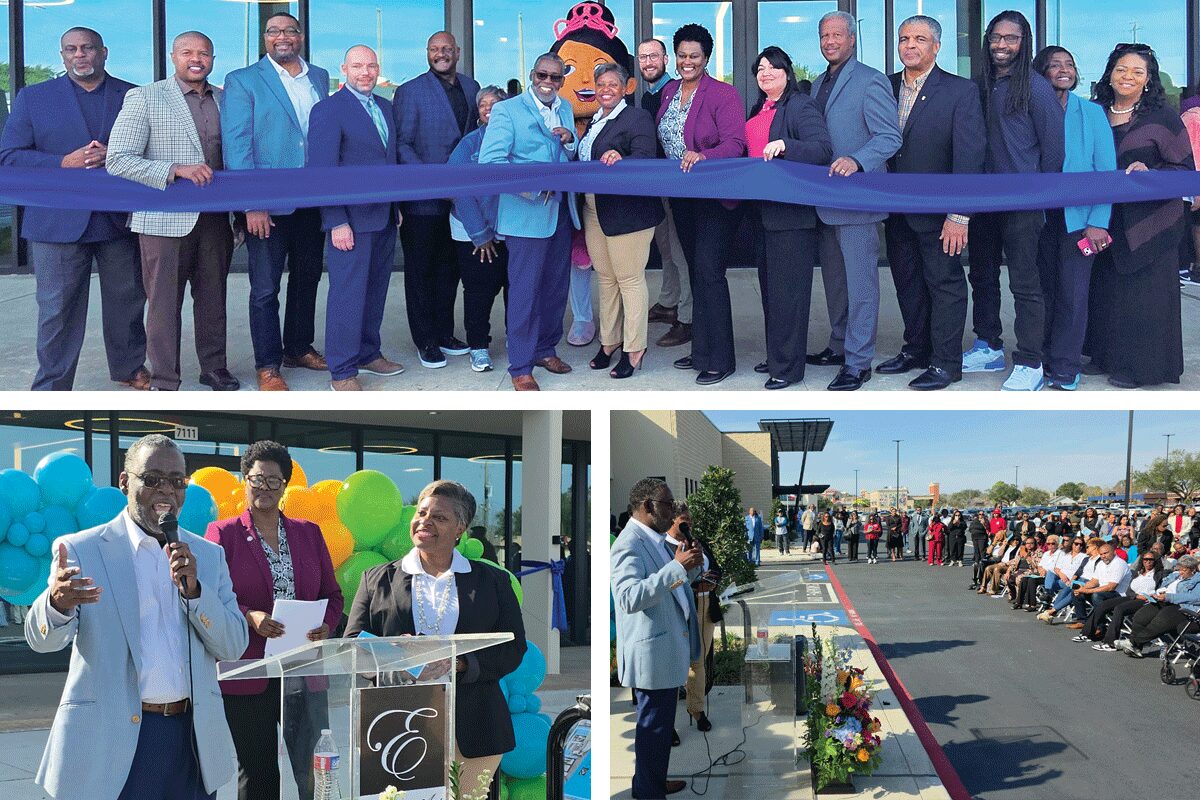
The center is named in honor of Carter’s parents, Robert and Bertha Edison. For Carter, the location is deeply personal; it is the same plaza where her parents used to take her to shop when she was a child.
By reclaiming the space, Carter is doing more than just renovating a building—she is anchoring a “revitalization without gentrification,” a term coined by U.S. Rep. Al Green, who helped secure federal funding for the project.
“At its heart, the Edison Cultural Arts Center is about access,” said Carter, who opened a 126-unit affordable housing complex next door to the center in 2021. “We are opening doors for young people, emerging artists, and families who deserve meaningful opportunities to learn, create, and see themselves reflected in the arts.”
Investing in the Future
The investment from H-E-B underscores a shared belief that community health starts
with its children. The center’s After school Arts Academy aims to provide a safe, creative haven during the afternoon hours—a time Mayor Pro Tem Martha Castex-Tatum described as the most dangerous for unsupervised
“latchkey” children.
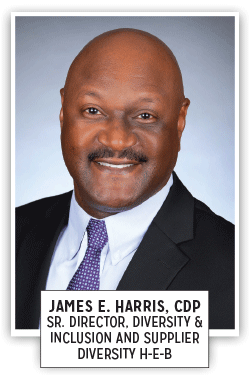
“At H-E-B, our giving is rooted in strengthening communities and investing in people, especially children,” said James Harris, H-E-B’s Director of Diversity & Inclusion and Supplier Diversity. “The Edison Arts Performance Foundation brings that commitment to life by creating a space where young people can discover their potential, neighborhoods can be revitalized, and local small businesses can connect and grow.”
A Multi-Phase Transformation

The grand opening marks the culmination of Phase 2 of the multi-year project. While the immediate focus is the After school Arts Academy—offering instruction in music, dance, and visual arts—the full scope of the center is massive.
Once complete, the facility will feature:
- A 400-plus seat performing arts theater and a 165-seat black box theater.
- State-of-the-art dance studios and a youth center with computer labs.
- A community park, green space, and a healthcare facility.
- A food hall, co-op kitchen, and retail spaces for local small businesses.
Economic Catalyst

Beyond the stage, the center is designed to be an economic engine. Carter expects the facility to draw more than 208,820 visitors annually, breathing life back into a neighborhood that saw small businesses vanish after the Kroger closed a quarter-century ago.
In addition to the $1.5 million H-E-B partnership, the Center will offer naming rights to the 400-seat theater, which will open as part of phase 3.
H-E-B also plans to allocate more funding to the arts center as additional programs emerge, as part of their commitment to donate 5% of pre-tax earnings to Texas communities, said Harris.
The City of Houston’s Housing and Community Development Department also invested $5 million into the project, viewing it as a blueprint for urban renewal.
At a Jan. ribbon-cutting celebration, Carter said the focus will be on the children who will soon fill the halls with music and movement. Carter adds that the building is the vessel, but the community is the soul.
“A thing constructed can only be loved after it is built. But a thing created is loved before it even exists,” added Troy Carter, the foundation’s director of government affairs. “The Edison Arts Foundation embarked on a creation that has been loved from the beginning. The arts make a difference, and this center will be a place where every child who walks through its doors can dream bigger.”
For more information about upcoming programs and membership,
visit www.edisonartsfoundation.org.