


The Texas Civil Rights Project Briefing on the 2026 Elections
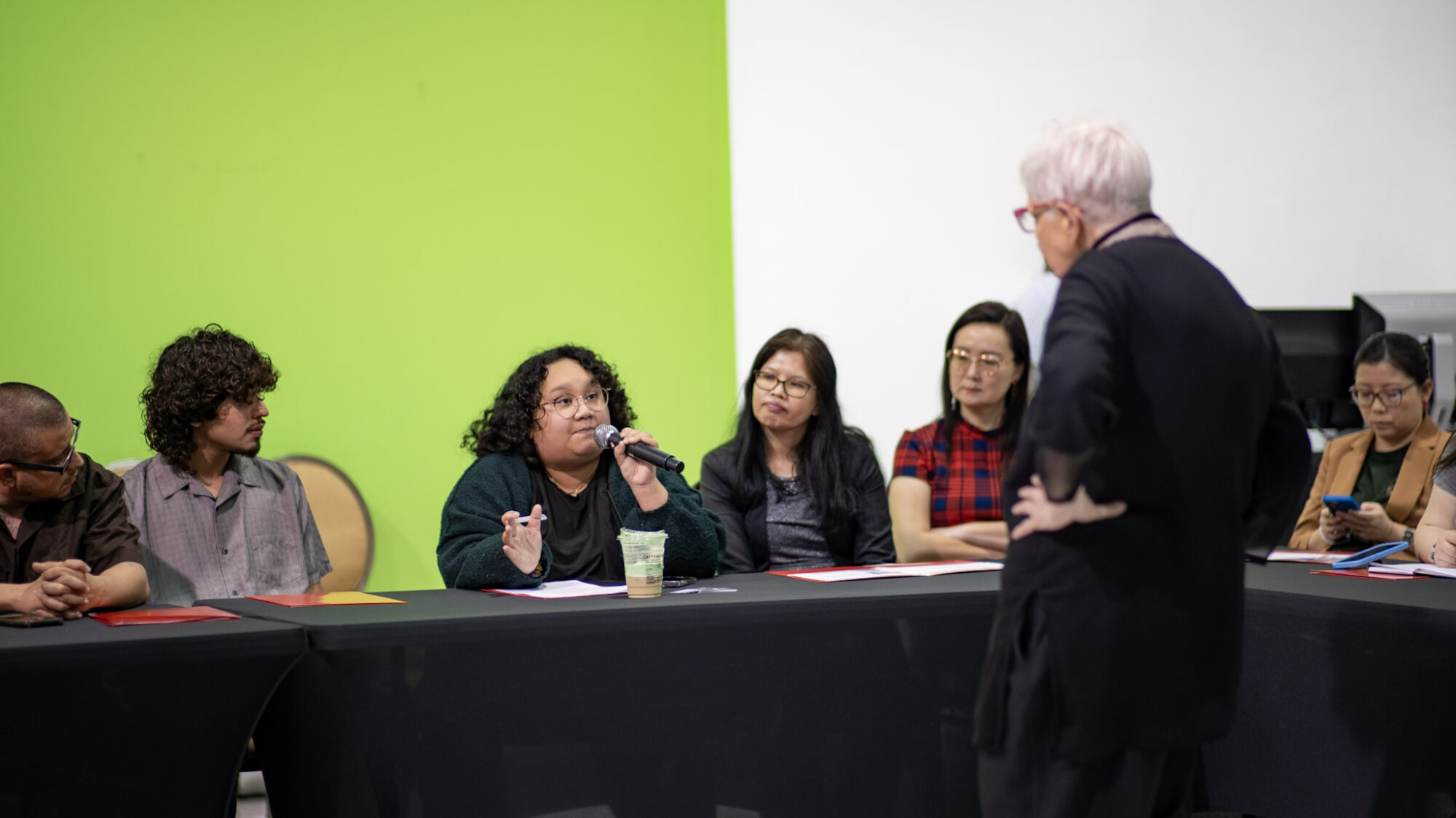
As Texas approaches the 2026 primary elections, questions surrounding voter access, election administration, and federal involvement are at the forefront and have intensified. To provide clarity and context, attorneys and advocates from the Texas Civil Rights Project (TCRP) joined Houston Community Media for a briefing covering election law basics, emerging legal concerns, and youth voter outreach efforts.
Senior Election Protection Attorney Carl Blair outlined key voting procedures and deadlines. Voting Rights Attorneys Karla Maradiaga and Nina Oishi addressed concerns about federal data requests, potential voter roll purges, and undermined public confidence in elections. Voting Rights Outreach Coordinator La’Dereka Christian highlighted efforts to increase civic participation among young voters by strengthening high school voter registration compliance.
Carl Blair: Election Protection and Voting Basics
Carl Blair serves as Senior Election Protection Attorney with TCRP, a nonprofit founded in 1990 that has conducted Election Protection work every cycle since 2016. Blair focused on demystifying Texas election procedures and ensuring voters understand their rights.
Election Protection Coalition
TCRP is part of the Texas Election Protection Coalition, the largest nonpartisan election protection coalition in the state. The coalition works to ensure equal access to the ballot and uphold voting rights for all eligible Texans.
Voters can report issues through multilingual Election Protection hotlines, including:
- 866-OUR-VOTE (English)
- Spanish-language hotlines
- Asian-language hotlines
- Arabic-language hotlines
- Disability rights support lines
The coalition monitors issues reported by voters, hotline operators, poll monitors, partner organizations, counties, media, and social media. Common problems include long lines, polling place closures, misinformation, voter intimidation, lack of disability access, and poll watcher misconduct.
Key 2026 Primary Dates
Blair emphasized the importance of key deadlines for March 3, 2026, primary:
- February 2: Last day to register to vote
- February 17: Early voting begins
- February 20: Last day to apply for a mail-in ballot
- February 27: Last day of early voting
- March 3: Election Day
- March 9: Deadline to cure provisional ballots and certain ballot defects
Missing these deadlines can prevent a ballot from being counted, making voter education critical.
Voter Eligibility and Registration
To vote in Texas, individuals must:
- Be a U.S. citizen
- Be at least 18 years old by Election Day
- Not currently be serving a felony sentence
- Not be declared ineligible by a court due to guardianship
- Be registered to vote
During early voting, Texans may vote at any polling location within their county. On Election Day, some counties allow countywide voting, while others require voters to cast ballots at their assigned precinct.
Voters who move within the same county but miss the registration deadline may vote at their former precinct or a countywide site and complete a statement of residence. Those who move to a new county may need to register in the new county or cast a limited ballot during early voting.
Voter ID Requirements
- Texas requires specific forms of photo identification, including:
- Texas driver’s license
- Texas personal ID card
- Texas election identification certificate
- Texas handgun license
- U.S. military ID
- U.S. citizenship certificate with photo
- U.S. passport
If a voter possesses one of these IDs, they must use it.
Expired IDs are acceptable if:
- The voter is 70 or older (no expiration limit), or
- The voter is under 70 and the ID expired no more than four years ago.
Voters without photo ID may complete a Reasonable Impediment Declaration and provide supporting documentation such as a utility bill, bank statement, paycheck, or birth certificate. Poll workers may not question the reason given for the impediment.
Blair clarified several common misconceptions:
- Address matching is not required.
- Exact name matching is not required — only “substantially similar.”
- Gender markers do not need to match.
- A REAL ID star is not required.
Accessibility and Language Access
Texas law guarantees assistance for voters who need help casting a ballot. Voters may receive assistance from a person of their choice (except an employer or union representative), and there is no age limit for assistants. Poll workers cannot question a voter’s disability.
All polling places must be accessible and provide accessible voting machines for private voting. Curbside voting must be available, though voters must sign a form affirming they require it due to illness or disability. Individuals transporting seven or more curbside voters must complete additional documentation.
Ballots are printed statewide in English and Spanish, with additional language requirements in certain counties, including Vietnamese, Chinese, and tribal languages. Voters may bring translators, who must sign an affidavit affirming they will not influence the voter’s choices.
Reporting on Elections
Blair urged journalists to rely on sources such as the Texas Election Code, Texas Administrative Code, and Secretary of State advisories. Proactive reporting is essential to combating misinformation, and voters encountering issues should be directed to Election Protection hotlines.
Karla Maradiaga: Federal Involvement and Voter Roll Concerns
Karla Maradiaga, a Voting Rights Attorney on TCRP’s litigation team, discussed federal involvement in state election administration and the risk of improper voter purges.
Elections are traditionally administered by state governments. Recently, however, the U.S. Department of Justice (DOJ) requested voter registration lists from states. Responses varied: some states refused and are now in litigation with the DOJ, while Texas complied under a confidential memorandum of understanding.
Texas reportedly shared voter roll data that includes sensitive personal information such as driver’s license numbers, Social Security numbers, and addresses. The DOJ stated that the purpose was to review list maintenance and identify potential non-citizens on the rolls. Although non-citizen voting is extremely rare, the federal government has prioritized investigating it. The data has reportedly been shared with the Department of Homeland Security.
Maradiaga warned that flawed database matching could lead to improper voter purges. Naturalized citizens or individuals with similar names to non-citizens could be mistakenly removed.
Federal law prohibits systematic voter purges within 90 days of an election. Because Texas is within that protected window due to primaries and runoffs, large-scale removals during this period could violate the Voting Rights Act.
Texas law also requires registrars to notify voters before removal and provide an opportunity to respond. TCRP and allied organizations are monitoring developments, encouraging voters to check their registration status, and raising concerns about potential violations.
Nina Oishi: Misinformation and Election Narratives
Voting Rights Staff Attorney Nina Oishi addressed how claims about “potential non-citizens” are often amplified in press releases but later reduced after review. Initial announcements may cite large figures identified through database checks, yet subsequent analysis often reveals errors or flawed matching processes.
Investigative reporting, including work by ProPublica and the Brennan Center, has documented discrepancies and raised concerns about federal data requests.
Oishi noted that courts have largely sided with states that refused to comply with DOJ requests, suggesting the legality of those demands remains contested.
She framed these developments as part of a broader narrative that casts doubt on election integrity. Repeated claims of fraud or administrative misconduct can erode public trust, despite the constitutional authority of states and local governments to administer elections.
Oishi also addressed rhetoric about immigration enforcement presence at polling places. She emphasized that strict legal limits govern who may be present and that voter intimidation is unlawful. Individuals witnessing irregularities should contact voter protection hotlines.
She underscored that voting machines are secure and reliable, and that proposals such as hand-counting ballots are generally less accurate. Legal advocates across Texas are actively preparing to challenge threats to election administration and voter confidence.
La’Dereka Christian: Outreach to Gen Z
La’Dereka Christian, TCRP’s Voting Rights Outreach Coordinator, focuses on expanding civic engagement among young voters. Texas law requires public high schools to provide students the opportunity to register to vote at least twice per academic year. Schools must ensure applications are available and students understand the process. Yet compliance has lagged. In 2020, only 38 percent of high schools met state voter registration compliance standards.
Christian works directly with school administrators and educators to close this gap. Her outreach includes guidance on legal obligations, tools to facilitate registration drives, and systems to ensure sustainable compliance.
She views this work as an opportunity for generational transformation. By engaging students before graduation, schools can cultivate lifelong civic participation. Fully implementing existing voter registration laws could significantly increase youth turnout and shift civic engagement patterns across Texas.
Conclusion
The briefing emphasized two main areas of focus: access and accountability. From understanding identification requirements and critical deadlines to monitoring potential unlawful purges and intimidation tactics, TCRP’s team stressed that election protection is a legal and community responsibility.
For more information, visit https://www.txcivilrights.org/programs-voting-rights
– Kim Floyd
Editorial Note:
While this article reflects information provided during the Texas Civil Rights Project briefing, readers are encouraged to consult primary sources, official election authorities, and applicable statutes to confirm current laws and deadlines.