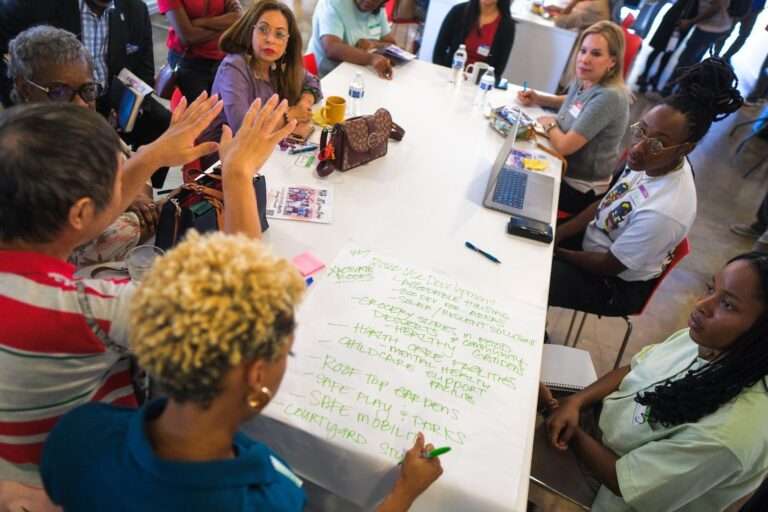


In Houston, where the cost of living rises faster than income, the question of housing is more dire than ever. How do residents not only find a home, but keep it? Getting Housed and Staying Housed in Houston, was the top of a recent media briefing hosted by Houston Community Media.
Land, Policy and Community Control
Christa Stoneham, President and Chief Executive Officer of the Houston Land Bank, said the agency was created to activate underutilized public land and reduce bureaucratic barriers that slow housing and community development.
“The Land Bank is not a builder,” Stoneham said. Instead, she explained, the Houston Land Bank partners with government and community partners to find housing solutions and access to housing. Stoneham shared that there are over 1K acres of publicly owned land that’s underutilized.
“My job is to transform Houston one site at a time,” she said. “We don’t just want to build back — we want to build smarter.”
Permanent Affordability and Stability
Ashley Allen, Executive Director of the Houston Community Land Trust, described the community land trust (CLT) model as a tool to preserve affordability permanently. Basically, to ensure what is created will last.
The Land Trust, started in 2018, is community governed and serves as a stewardship to assist in helping people be successful and stay in their home. There are 201 homeowners in the program now.
To qualify to buy, one must:
- Have a gross annual household income of less than 80% AMI.
- Attend an 8-hour HUD certified homebuyer education course and one CLT Orientation classes.
- Be able to obtain a fixed-rate, 30-year mortgage from list of approved lenders.
- Have limited debt that is below Houston CLT’s debt-to-income ratio limits.
- Maintain at least $1,000 of personal funds in reserve at closing.
- Be willing and able to submit all required documentation to verify eligibility.
Rental Assistance, Vouchers and Gaps
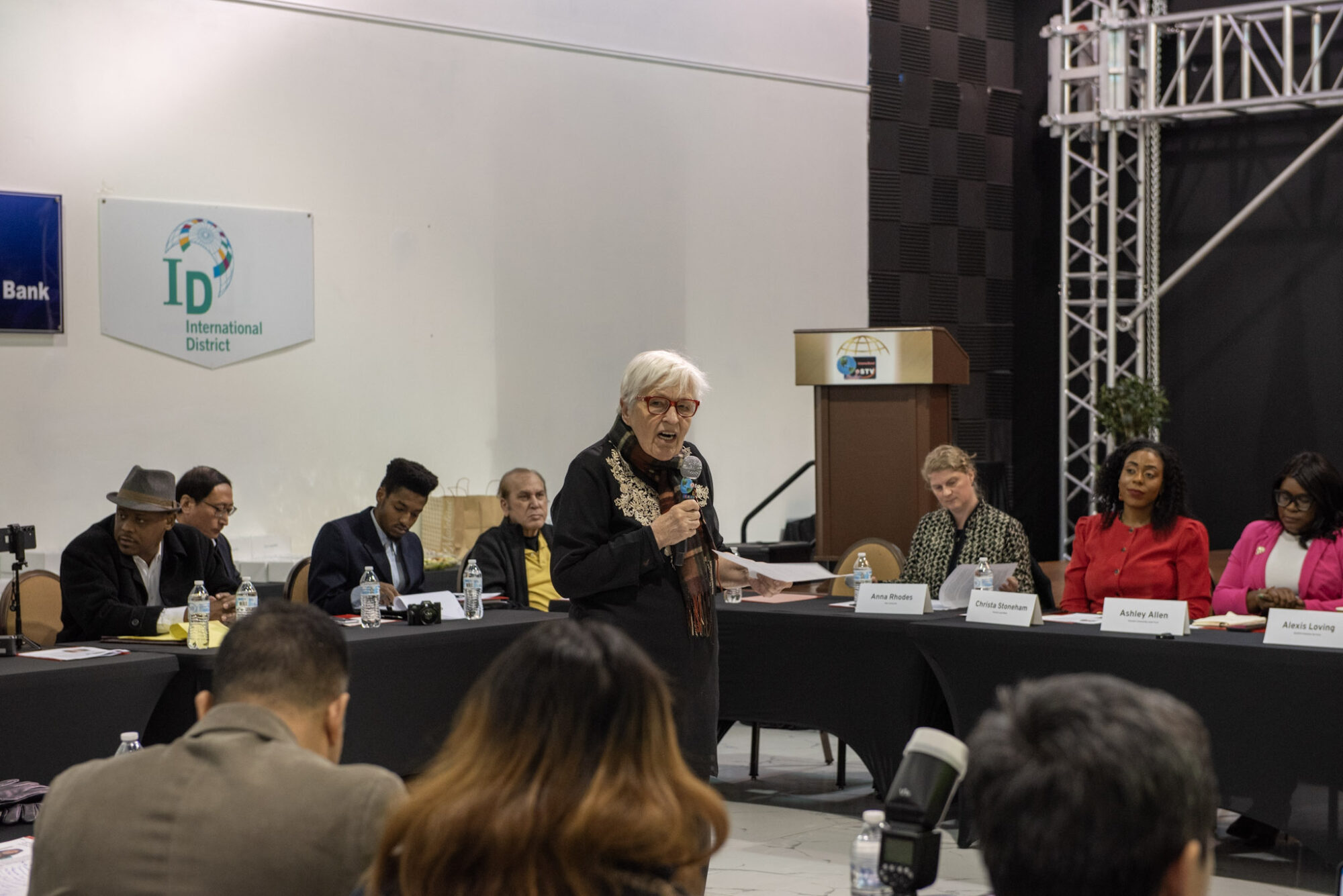
Anna Rhodes, Associate Professor of Sociology at Rice University and a senior fellow with the Kinder Institute for Urban Research, provided information on the federal Housing Choice Voucher program, which is the largest rental assistance program in the nation.
Rhodes said chronic and persistent underfunding has left only about one in four eligible households receiving assistance. She noted that waitlists for the Houston Housing Authority and Harris County Housing Authority remain closed.
Rhodes also highlighted barriers faced by voucher holders, including landlord discrimination, administrative delays and the absence of source-of-income protections in Texas.
“In Texas, landlords can legally refuse to rent to someone because they use a voucher,” she said.
Unhoused Response
Alexis Loving, President and CEO of SEARCH Homeless Services, cautioned against assuming homelessness is “solved” when someone receives housing. She shared Houston’s widely cited 60% reduction in homelessness since 2011 but said long-term stability remains the biggest challenge.
Loving stressed the importance of wraparound services to address unmet needs including mental health care, medical care and income stabilization, to aid in keeping people housed.
“Housing is not a finish line,” she said. “It’s not just about a unit — it’s about stability, care and support.”
2-1-1: A Lifeline to Hope and Help
Aarti Goswami, Assistant Vice President of Community Outreach for the 2-1-1 program at United Way Greater Houston, described the 24/7 helpline as a free and confidential, key access point connecting callers to housing assistance, food access, utility support, transportation and mental health services. United Way of Greater Houston operates one of the largest 2-1-1 systems in the nation, facilitating more than one million connections annually. Every call is answered by a real, live specialist trained to assess needs and connect individuals to trusted community resources.
Residents needing assistance can dial 2-1-1, text ZIP to 898211, or visit 211texas.org for help in more than 350 languages. For more info, visit United Way’s 2-1-1: A Lifeline Connecting Greater Houston to Hope and Help – d-mars.com
Conclusion
All in all, the briefing’s conversation underscored that housing stability in Houston requires coordinated systems and policies that protect affordability. From land banks and community land trusts to vouchers and prevention hotlines like 2-1-1, the city’s housing advocates are building a future where every Houstonian has the chance not just to live here, but to thrive and maintain a safe space. – Kim Floyd