
By Frenetta Tate
We live in a world that’s always pushing us to do more, get more, be more. Hustle culture runs deep, and while ambition is a beautiful thing, it can also be a trap. When success is the only scoreboard we watch, we lose sight of what truly keeps us grounded: gratefulness.
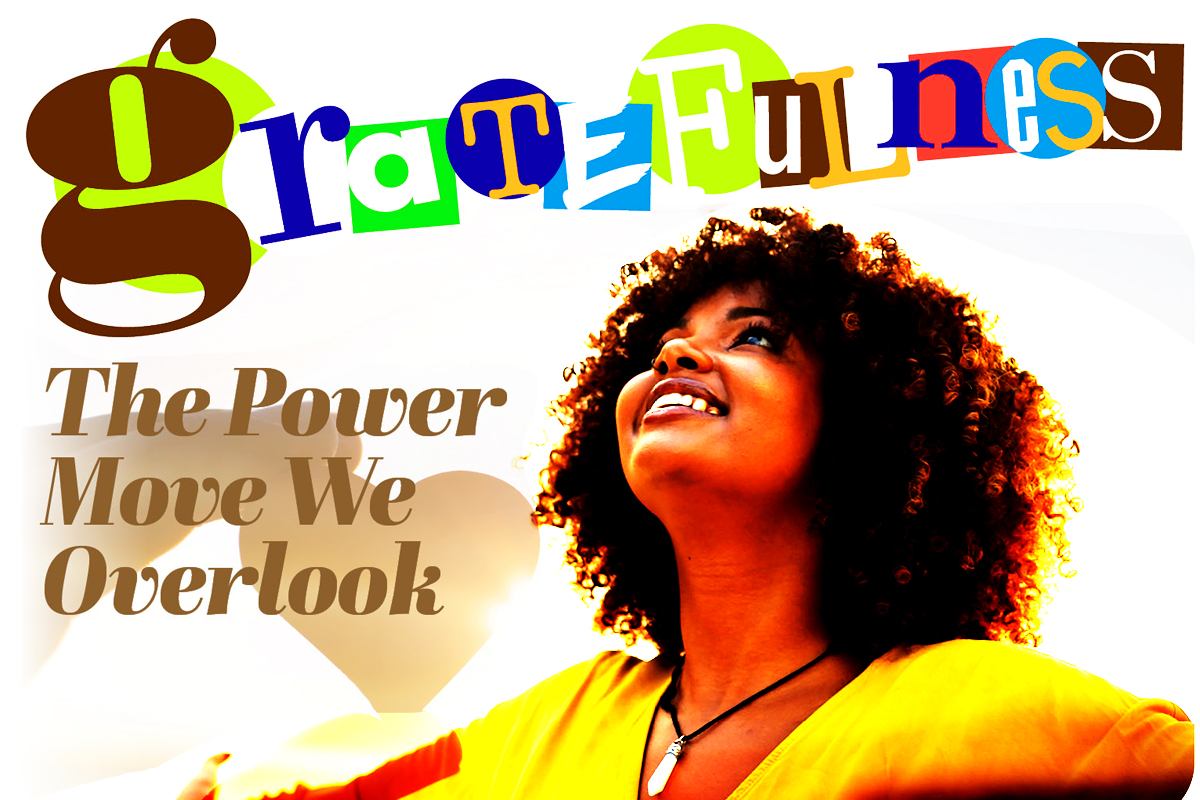
Gratefulness is about pausing long enough to recognize what’s real, what’s good, and what’s worth protecting. And in a society where resilience is often our default mode, practicing gratefulness isn’t just healthy — it’s a power move.
It’s Part of Who We Are
Gratitude shows up in the way we gather, support, and celebrate one another — through shared meals, meaningful conversations, and showing up for each other during life’s highs and lows. It’s intentional. It’s how we create space for reflection, connection, and perspective, even in the midst of chaos.
It’s showing up to clap the loudest for someone else’s win, even when you’re waiting on your own. These aren’t empty gestures — they’re quiet declarations of care, connection, and mutual respect. In a fast-moving world, taking time to truly be present with people is an act of gratitude. It says, “I see you. You matter.” Whether it’s lending a listening ear, offering your time, or creating room for joy in the middle of stress — these moments are how gratitude becomes real. It’s not about putting on a show for social media. It’s about choosing to value people and presence, even when life is noisy, unpredictable, or demanding. Gratitude, at its core, is about intention — and in times of chaos, that intention becomes a stabilizing force.
Gratefulness Builds Mental Strength
Gratitude shifts mindset. Research consistently shows that people who regularly practice it tend to sleep better, stress less, and strengthen their relationships. But beyond the data, it’s about how we carry ourselves through difficulty.
Gratefulness doesn’t erase struggle — it coexists with it. It doesn’t cancel out grief, stress, or frustration. It simply reminds us that even in the middle of hardship, there is still something holding us up. Even if it’s just the fact that we made it through the day.
Gratitude Connects Us
None of us gets through life alone. Behind every success is a web of support — mentors, colleagues, family, friends, or even strangers who extended a kindness when we needed it most. Gratitude reconnects us to that truth. It nudges us to reach out and say, “Thank you for being there.” And more importantly, it encourages us to return the favor — not out of obligation, but from a place of appreciation.
Acts of giving, supporting others, and lifting someone up are all extensions of a grateful mindset. When you truly recognize what you’ve been given — whether it’s time, resources, wisdom, or simply the ability to keep going — it naturally creates a desire to pay it forward. Gratitude moves us from internal reflection to outward impact. It’s what turns appreciation into action.
That action might look like mentoring someone who’s trying to find their way, sharing knowledge without keeping score, or helping a friend stay afloat when life gets overwhelming. It can be as simple as making space at the table, listening without judgment, or offering encouragement when someone’s confidence is shaken.
Gratitude fuels generosity — not just with money or material things, but with time, attention, and care. It says, “Because someone showed up for me, I’ll show up for someone else.” And in that cycle of giving, we reinforce the truth that we’re all connected. Gratitude that doesn’t just live in words but shows up in how we treat others — that’s where the real transformation happens.
Gratitude in Practice
Gratitude doesn’t have to be a grand gesture. It’s in the quiet moments — noticing the way sunlight hits your desk, enjoying a good laugh, finishing something you thought you couldn’t. It’s writing down three small wins at the end of the day. It’s taking a breath and reminding yourself that you’re still standing.
Gratefulness isn’t about ignoring the mess of life. It’s about not letting that mess erase what’s still good.
And If You Can’t Find Anything to Be Grateful For…
Some seasons are heavy. Maybe you’ve experienced loss. Maybe your mental health is on empty. Maybe the pressure is too much, and nothing feels “good enough” to be grateful for.
If that’s you, know this: you’re not alone, and you’re not failing.
Gratitude doesn’t require joy. It starts with awareness. It can be as small as noticing that you made it out of bed. A deep breath. A moment of quiet. A message from someone checking in. A cup of coffee that warmed your hands.
You don’t need to fake it or force it. Just recognize what’s present. Sometimes, just saying “I’m still here” is not only enough — it’s everything.
This time of year, often brings the same surface-level messages: be thankful, be positive, count your blessings. But this year, let’s go deeper.
There’s a lot happening in the world right now — tension, uncertainty, division. And while we can’t always fix what’s out there, we can check in with what’s happening inside ourselves.
Ask yourself:
- What am I truly grateful for — and have I acknowledged it?
- Who needs to hear “thank you” from me?
- What lessons have I overlooked in my own journey?
- Where can I shift from complaint to appreciation?
Because gratefulness is often quiet. It doesn’t shout. It doesn’t demand the spotlight. But make no mistake — it’s a power move. It grounds us when the world is spinning. It refocuses our energy from what’s missing to what matters. It strengthens relationships, sharpens perspective, and reminds us of our responsibility — to ourselves and to each other.
We’ve been taught to hustle, push, and chase. But gratitude is a different kind of strength — one that doesn’t drain but restores. One that doesn’t compete but connects.
So, as we close out this year, let’s stop treating gratefulness like an afterthought. Let’s see it for what it truly is: a mindset shift, a tool for growth, and a daily discipline that can shape how we live, lead, and relate. It’s not soft. It’s strategic. And it might just be the most powerful move we’ve been overlooking all along.
Frenetta Tate is a 5X Author, Certified Women’s Empowerment Coach, Entrepreneur Coach, Business Consultant and Thought leader on Leadership and Personal Development. Visit www.frenettatate.com