
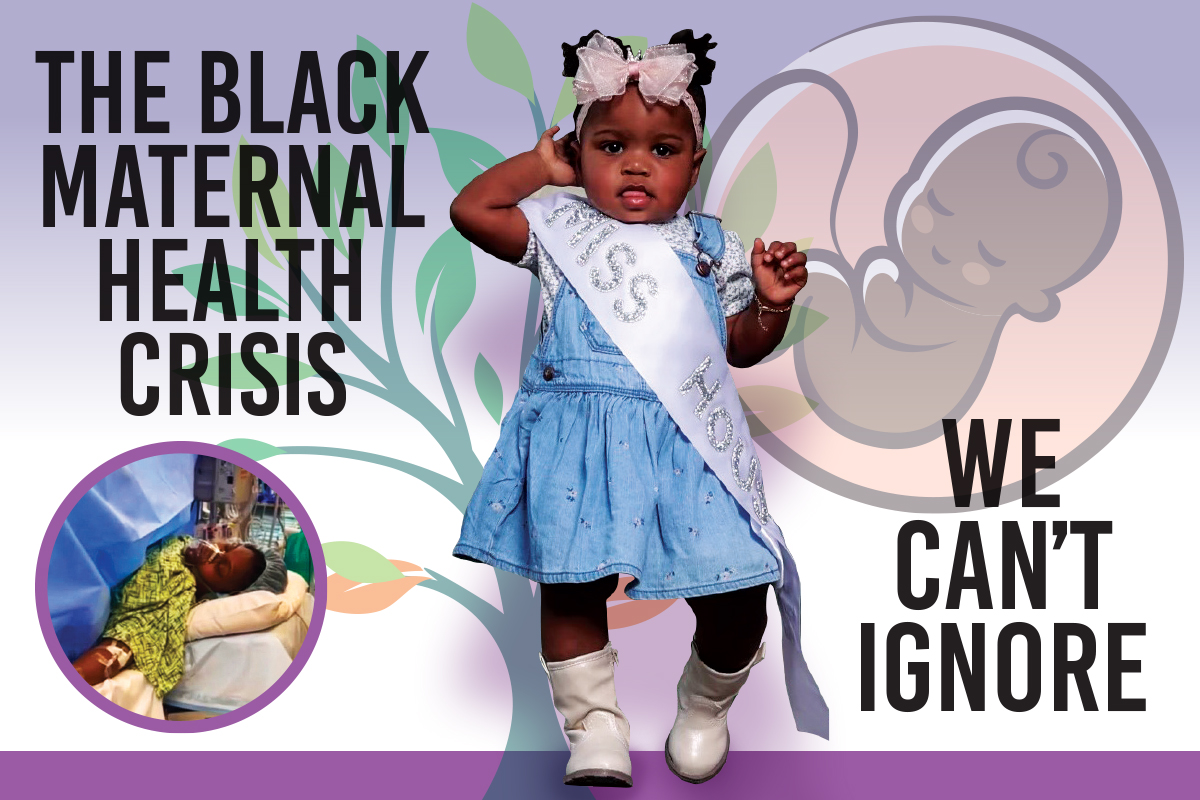
Recent data highlights an increase in maternal deaths. According to the Centers for Disease Control and Prevention (CDC), 688 died in 2024 during pregnancy or shortly after giving birth. That’s up from 669 deaths in 2023, but down from 2022 and 2021. The leading causes of these deaths include blood vessel blockages, infections, and excessive bleeding. What’s disturbing is that a large percentage (80%) of these deaths in the U.S. are preventable.
When it comes to our Black women, they are three times more likely to die from pregnancy-related causes than white women. Various factors contribute to these disparities, such as the standard of quality healthcare services and underlying long-term conditions. In addition, social considerations can make it challenging for minority groups to have exceptional economic, physical, and emotional health. This would suggest that racial disparities do exist when it comes to our Black mothers.
A group raising awareness and working to combat these statistics is the Black Mamas Matter Alliance (BMMA). This Black female-led alliance focuses on supporting Black mothers and moms-to-be. The BMMA is driving advocacy and research efforts, also helping to shift the culture and mindset as it relates to Black maternal health. To help further their efforts to establish rights and justice, they founded Black Maternal Health Week, an annual observance in April.
Though many Black mothers have suffered in silence, they are now more courageous to talk about the prejudices, challenges, and life-threatening experiences during the delivery journey. Not being a mother myself, I was unaware of the racial disparities and pregnancy-related deaths of our Black mothers until my close friend, media personality and journalist, TotallyRandie, almost lost her life while giving birth to her second child. Her experience has since influenced her view of the healthcare system. “Systemic racism is the foundation for the reason why Black women die three times more than white women,” she said. “I’ve been vocal about the healthcare system in Texas and how it has been on a decline for the past 20 years, but with more of us sharing our stories, you can truly see the gap between the wealthy and non-wealthy.”

Reading TotallyRandie’s journey should be an eye-opener into the systemic racism of the healthcare system and the trauma many Black women encounter during delivery. Her story should make us think twice before just liking a friend’s baby photo and quickly scrolling to the next.
Q&A With TotallyRandie:
Please describe your childbirth experience in detail. I still struggle to put it into words. It’s been over a year, and I’m still processing what happened. My due date was set for May 14, 2024. While we all know babies can arrive on their own schedule, there were no signs that my daughter would come early.
On May 7, I woke up with a horrible toothache and scheduled a dentist appointment for the next day. But when I got to the dentist’s office, they told me I needed a release form from my doctor before they could do anything.
The problem was that due to the fractured healthcare system in Texas, I didn’t have a doctor at the time. I had to go to the hospital where I was scheduled to deliver to get the release form. Keep in mind, I was in significant pain the entire time.
When I arrived, the nurses asked if I remembered feeling my daughter move the night before. I told them honestly that I didn’t recall because my focus had been on managing my pain. Rather than give me the form and send me on my way, they became fixated on the “no blood” notation in my chart. They asked if I refused blood transfusions. I reaffirmed that I didn’t take blood, and they eventually gave me some pain relief and hooked me up to a monitor to check on my baby, Luxe.
The monitor showed that Luxe was OK. I could feel her moving, and her vitals were strong, but they kept me waiting for the release form. I called my sisters, who stayed on the phone with me for support. Then, out of nowhere, the doctors came in and said they were preparing me for delivery.
I told them I wasn’t ready. I didn’t have my hospital bag, my husband wasn’t with me, and my parents weren’t there either. I was all alone. When I asked why they were doing this, their first justification was that I hadn’t felt Luxe move. I explained that it was because I was in pain, but I could feel her now. Then they said it was because I was 39 weeks along, and they wanted to deliver as a precaution.
The doctor who was to perform the C-section seemed confused by my fear. I told him, “Because Black women die here.” Instead of addressing my concerns, he tried to reassure me by saying he performs 60 C-sections a year and that women fly from all over the world to have him as their surgeon. That didn’t ease my fears.
I begged them to at least wait until my husband or parents arrived. Thankfully, they agreed. But while we waited, they kept asking me about blood transfusions. It felt like they weren’t listening to me. When my husband finally arrived, they began to prep me. While doing so, I overheard them arguing about how much anesthesia to give me. One said to go by weight, while the other insisted on using kilos. I was so scared, but I didn’t have time to process it all.
Once I was in the operating room and they administered the epidural, I was lying back, but I immediately told them something felt off. I said, “Please remind me to breathe.” That was my last thought before my heart stopped.
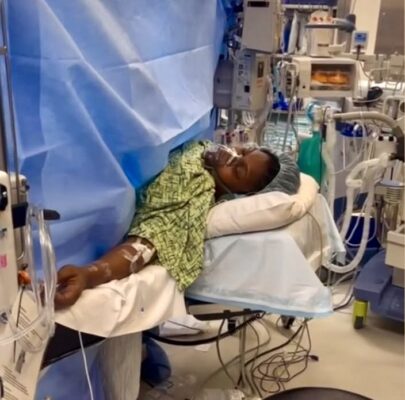
When I came to, I gasped for air. It was painful, like a fire raging through my chest. I fought to breathe for what felt like an eternity, and in my confusion, I even swatted at the doctor, thinking he was trying to harm me. Nurses were crying over me, saying they thought I was gone and they had lost me. I could hear my baby crying in the distance, but I couldn’t fully comprehend what had just happened.
I looked over to see my husband, his face frozen in shock. It wasn’t until later that I learned my heart had stopped while Luxe was still inside me. They performed an emergency delivery to save her and worked tirelessly to bring me back. I still have the scar where they pulled her out.
For three days, they kept me in the ICU, running test after test to cover themselves. It felt like they were trying to find something wrong with me to justify what had happened. Afterward, they moved me to an expensive postpartum floor, continuing to run tests while assigning me a new nurse every day. My chart was changed, and they kept shifting the timeline of how long I’d been “dead.”
They never found anything wrong with me. Would I have been treated like this if I were a white woman? Though I heal quickly physically, I know the psychological wounds will take much longer to recover from. I’m still processing everything, even a year later, because experiences like mine remind us why we need to talk about Black maternal health, patient autonomy, and maternal mortality. These conversations aren’t just necessary; they’re urgent.
Please share your thoughts on racial inequalities in healthcare based on your personal experience. Systemic racism is at the root of why Black women are dying during childbirth at rates three times higher than others. For me, it started when the doctor originally scheduled to perform my C-section said he couldn’t because he was working with a new doctor who refused to perform the procedure due to my choice not to use blood. They transferred my medical records to Texas Children’s Pavilion for Women, but for an entire month, my file just sat there, untouched. I kept calling, desperate for answers, and all they told me was that I’d be assigned a doctor soon, but it never happened. They only took me in on May 8, the day they decided to take my child.
One story that stuck with me was from one of my nurses, who told me about a Black nurse practitioner who died giving birth in that very hospital six weeks before I was there. She had her beautiful son, but while the doctor was stitching her up, they noticed a tear, and she started losing blood rapidly. Her doctor called for blood twice, but it never came. She bled out, right there in the hallway. They didn’t even have enough time to take her to the OR. I later met the father of her baby boy. He told me about that day—how he went from witnessing the birth of his first child to witnessing the unimaginable loss of his son’s mother.
This wasn’t about a lack of resources. It was about pure neglect. Blood is critical for childbirth emergencies, so why wasn’t any available? That nurse didn’t even have a “no blood card” like I did. And yet, she still lost her life because Black lives, even Black healthcare workers, aren’t prioritized the same way as others. This is systemic racism at its core, and it’s costing us far too much.
What advice or message would you give to Black mothers-to-be as they prepare for labor? First and foremost, consider having a doula or someone you trust to advocate for you during the entire process. If your insurance covers a doula, absolutely take advantage of that. If not, make sure you have someone by your side who can speak up for you when you need it most. And remember, you’ll need to advocate for yourself, too, as much as you’re able. Getting your nursery ready, picking out adorable outfits, and even doing your hair are all important, but nothing matters more than bringing your baby home safely. Plan ahead. Create your birth plan months before your due date, and keep it updated. Have both a printed copy and a digital version ready to share. Document everything and trust yourself. If anything feels uncomfortable or wrong, don’t be afraid to say no. Your voice matters. Being prepared and having a clear plan in place can make all the difference in protecting your health and ensuring the best outcomes for you and your baby.
Is there anything else you’d like to share with our readers? I’m still processing everything I went through, even a year later. Writing this has brought me to tears. I don’t know when I’ll feel “OK” again. I’m carrying survivor’s remorse, guilt, and an overwhelming mix of emotions that I’m working through with the help of therapy. Doctors say it can take up to two years for a mother’s hormones to balance and return to herself after giving birth. But how do you quantify healing from birth trauma? I don’t know how long it will take me. To every mother who has given birth, experienced trauma during delivery, struggled with infertility, or dreams of becoming a mom one day, I want you to know this: you are not alone. There’s an entire community of mothers ready to be your shoulder to lean on and your support system. To fathers who have brought their babies home without the mothers who gave birth to them, I would like to connect with you as well. Please feel free to email me at Bell.DF@ME.COM.
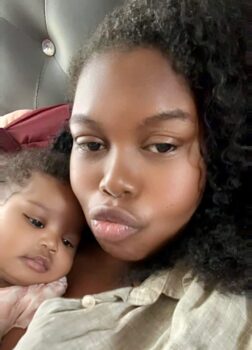
TotallyRandie challenges the Black community to be more vocal about this issue while supporting our moms. “The community should be hosting more events, consistently covering this issue, and getting loud about Black maternal health beyond April,” she shared. “Also, kindness goes a long way. Ask a mother-to-be or a new mom how you can be of assistance. Sometimes just listening is so helpful. My daughter was not planned. She was a beautiful surprise, but my experience giving birth to her put me in a very dark place. I don’t know what I would have done if I didn’t have my tribe.”
For more information on Black maternal health or if you are a mom-to-be or new mom seeking support, please visit www.blkmaternalhealthweek.com and www.blackmamasmatter.org.
Source(s): AP,CDC, Black Maternal Health Week, Black Mamas Matter Alliance
*The interviewee’s responses were edited for clarity using AI.
Dawn Paul, also known as The Dr. Dawn®, is an award-winning media personality, public speaker, certified life coach, and author. She has extensive experience in writing, reporting, and editing for the Black press. Dawn is a member of the HABJ and the NABJ. Follow her on social media at @TheDrDawn.